The DBSV has also developed a package of worksheets to prepare the sense of touch and tactile skills for learning Braille. Punktum Course Part 2 can be downloaded as a BRL file
here
Each worksheet contains a specific task. However, additional alternative tasks can also be set.
The material is divided into four chapters. :
a. Horizontal – Vertical:
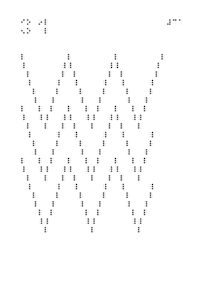
Each of the 50 sheets has one or more lines that run from left to right – i.e., horizontally – or from top to bottom – i.e., vertically. The lines vary in thickness and length, and they run straight, in waves, or in zigzags. The difficulty increases and in some cases it is not easy to recognize the course of the lines.
The student can, for example, sort the sheets into two piles: one pile for the horizontal lines and one for the vertical lines.
b. Shapes:
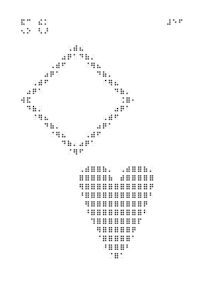
In the second chapter, there are 30 worksheets with squares, rectangles, circles, ellipses, diamonds, parallelograms, and hearts. The task is to recognize the shapes. The first 10 sheets each show two shapes, and the student has to figure out whether they are the same or different shapes. The next sheets show four shapes, then nine, and finally 16. The task is to identify which of the shapes in each row and column is different from the others.
c. Mazes:
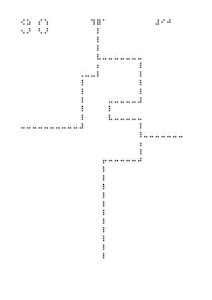
On the following 40 sheets, a line starts at the top center and ends either at the bottom left or bottom right edge of the sheet. However, there are two other lines that also end on the left, bottom, or right. The sheets can then be sorted according to where the line starting at the top ends.
d. Divided roads:
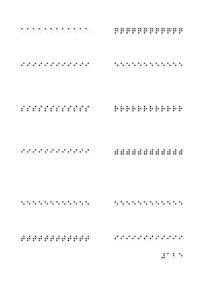
The last ten sheets contain rows of identical Braille characters. There is a gap in the middle. The task is to find out whether the characters on the left and right are the same or different. It starts with three lines on one sheet and the differences between the characters are very clear. On the following sheets, there are more and more lines and the characters become more similar.
The tasks are suitable for learners to work on alone. They can be done at home or in a study group, where the teacher gives some students a task and works with others during that time.
The tactile training exercises can be used in parallel with learning Braille letters. The more difficult tasks are also interesting for those who can already read Braille. This allows the teacher to break up the lesson and make it more varied.
Braille lernen und verstehen: Punktum Material zur Tastschulung
Um den Tastsinn und die Tastfähigkeiten auf das Braille Lernen vorzubereiten hat der DBSV auch ein Paket mit Arbeitsblättern entwickelt. Der Punktum-Kurs Teil 2 kann als BRL-Datei
hier heruntergeladen werden.
Auf jedem Arbeitsblatt gibt es eine konkrete Aufgabe. Es können aber auch zusätzliche alternative Aufgaben gestellt werden.
Das Material ist in vier Kapitel unterteilt. :
a. Waagrecht – Senkrecht:
Auf 50 Blättern gibt es je eine oder mehrere Linien, die von links nach rechts – also waagrecht – verlaufen oder von oben nach unten – also senkrecht. Die Linien sind unterschiedlich dick und verschieden lang, Sie verlaufen gerade, in Wellen oder im Zickzack. Die Schwierigkeit steigt und teilweise ist es nicht leicht, den Verlauf der Linien zu erkennen.
Die Schülerin kann z. B. die Blätter auf zwei Stapel sortieren: Ein Stapel für die waagrechten Linien und einer für die Senkrechten.
b. Formen:
Im zweiten Kapitel gibt es auf 30 Arbeitsblättern Quadrate, Rechtecke, Kreise, Ellipsen, Rauten! Parallelogramme und Herzen. Es gilt die Formen zu erkennen. Auf den ersten 10 Blättern sind je zwei Formen dargestellt und man soll herausfinden, ob es sich um dieselbe oder verschiedene Formen handelt. Auf den nächsten Blättern sind vier Formen, dann 9 und schließlich 16. Da ist jeweils die Aufgabe: Welche der Formen in jeder Zeile und in jeder Spalte ist anders als die anderen.
c. Labyrinthe:
Auf den folgenden 40 Blättern beginnt oben in der Mitte eine Linie, die entweder am unteren Blattrand am linken Rand oder am rechten endet. Es gibt aber jeweils zwei weitere Linien, die auch links, unten oder rechts enden. Die Blätter können danach sortiert werden, wo die oben startende Linie endet.
d. Geteilte Straßen:
Auf den letzten zehn Blättern stehen Reihen von gleichen Braille-Zeichen. In der Mitte ist eine Lücke. Hier ist herauszufinden, ob die Zeichen links und rechts gleich oder verschieden sind. Es startet mit drei Zeilen auf einem Blatt und die Unterschiede der Zeichen sind sehr deutlich. Auf den weiteren Blättern gibt es immer mehr Zeilen und die Zeichen werden sich ähneln.
Die Aufgaben eignen sich dafür, dass die Lernenden sie allein bearbeiten. Sie können also zu Hause gemacht werden oder in einer Lerngruppe gibt die Lehrkraft manchen eine Aufgabe und beschäftigt sich in der Zeit mit anderen.
Die Übungen zur Tastschulung können parallel zum Lernen der Braille-Buchstaben verwendet werden. Die schwierigeren Aufgaben sind auch noch für diejenigen interessant, die schon Braille lesen können. So kann man den Unterricht immer wieder auflockern und abwechslungsreich gestalten.
useful links:
Read all articles on: livingbraille.eu
Contact us with your contributions, ideas and questions by: braille200@livingbraille.eu
Social media: Braille 200 on Facebook